Hydrated, plump skin is something most people associate with youth, good health, and a well-maintained routine. While topical moisturizers have long been the default approach, there is growing interest in what can be done from the inside. Hyaluronic acid, a compound the body naturally produces, has moved from being exclusively a skincare ingredient applied to the face to something people are choosing to take orally. The shift reflects a broader recognition that skin health is shaped from within, not just by what gets applied on the surface.
Hyaluronic acid is a glycosaminoglycan, a type of molecule that binds water and retains it within tissues. It is found in significant concentrations in the skin, joints, and eyes. In the skin specifically, it plays a central role in maintaining moisture levels and supporting the structural matrix that gives skin its firmness and elasticity. As the body ages, natural production of hyaluronic acid declines, contributing to the visible signs of skin aging including dryness, reduced firmness, and the appearance of fine lines.
What Happens When Hyaluronic Acid Declines
The decline in hyaluronic acid production typically begins in the late twenties and continues gradually through the decades that follow. By the time most people reach their fifties, the skin’s ability to hold moisture has measurably decreased. This is why skin that once required little maintenance begins to feel drier, rougher, or thinner over time.
Environmental factors accelerate this process. UV exposure is one of the most documented drivers of hyaluronic acid degradation in skin tissue. Smoking, pollution, and diets low in antioxidants compound the effect. Even chronic low-level stress can affect the skin’s hydration balance through its influence on cortisol and inflammatory pathways.
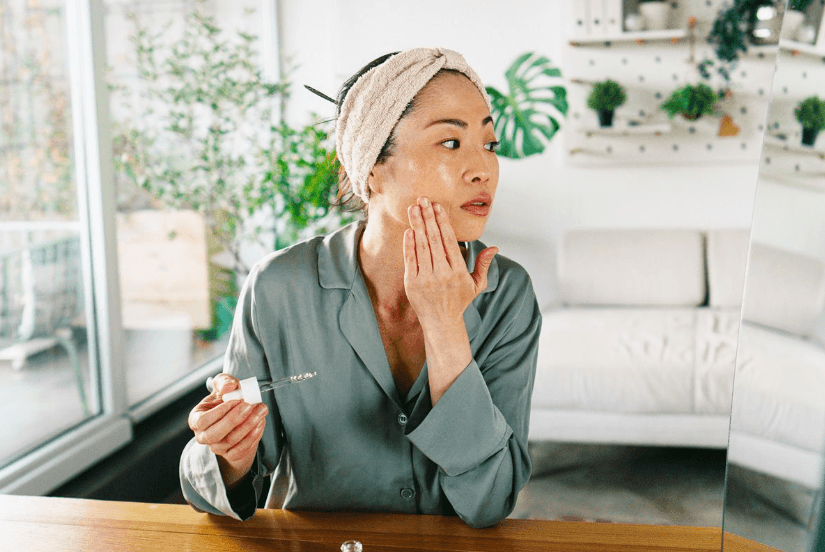
Topical hyaluronic acid helps in the short term by drawing moisture to the surface of the skin, but its molecular size means it rarely penetrates deeply into the dermis where the structural matrix sits. This is part of why oral supplementation has attracted attention. Some research suggests that hyaluronic acid taken orally can support the skin’s internal moisture levels in ways that topical application alone does not.
Why Choose an Oral Supplement
Taking a hyaluronic acid supplement for skin that is formulated with bioavailable ingredients allows for systemic distribution rather than surface-level application only. Studies on oral hyaluronic acid supplementation have shown improvements in skin moisture content, elasticity, and the reduction of visible wrinkle depth with consistent use over several weeks.
The quality and form of the supplement matters considerably. Lower-molecular-weight hyaluronic acid has shown better absorption in clinical studies compared to high-molecular-weight forms. Formulations designed to optimize bioavailability ensure the compound reaches the tissue layers where it is most needed.
Consistency is key. Oral supplementation works gradually, and the benefits accumulate over weeks rather than days. Users who maintain a consistent routine alongside good hydration, balanced nutrition, and adequate sun protection tend to see the most noticeable improvements.
Supporting Skin Health Holistically
Hyaluronic acid supplements work best when they are part of a broader approach to skin health. Adequate water intake remains fundamental. The skin reflects systemic hydration, and no supplement substitutes for sufficient daily fluid consumption. Diet also matters, with foods rich in vitamin C supporting the collagen synthesis that works alongside hyaluronic acid in maintaining skin structure.
Sleep, stress management, and minimizing excessive alcohol consumption all contribute to the skin’s ability to repair and maintain itself. Combining these habits with targeted supplementation gives the skin the best possible foundation.
See also: Must-Have Travel Skin Care Kit for Smooth, Healthy Skin on the Go
FAQ
How long does it take to see results from hyaluronic acid supplements? Most clinical studies report visible improvements in skin hydration and elasticity after four to eight weeks of consistent daily use.
Can I take hyaluronic acid supplements alongside other skincare products? Yes. Oral supplementation and topical products address different layers of the skin and can be used together for complementary benefits.
Who can benefit from hyaluronic acid supplementation? Adults who experience dry or dehydrated skin, those in their thirties and beyond noticing reduced skin firmness, and anyone wanting to support long-term skin health may benefit.
Are there any side effects? Hyaluronic acid is well tolerated by most people. Anyone with specific health conditions or who is pregnant or breastfeeding should consult a healthcare provider before starting any new supplement.
Is topical hyaluronic acid as effective as oral supplementation? Both have benefits. Topical forms address surface hydration, while oral supplementation works from within to support deeper tissue moisture levels. The two approaches complement each other.